





Psychology can be an extremely fascinating subject, even if it’s hard to remember that when you’re surrounded by a pile of textbooks preparing for exams.
Whether you’ve studied psychology for ages or your first year at uni is around the corner, here are eight books which will not only help you with your course but will also help you rediscover what you loved about psychology in the first place.
Enrich your mind by reading about the mind – makes sense, right?
Reaching Down the Rabbit Hole: Extraordinary Journeys into the Human Brain by Dr Allan Ropper and Brian David Burrell.
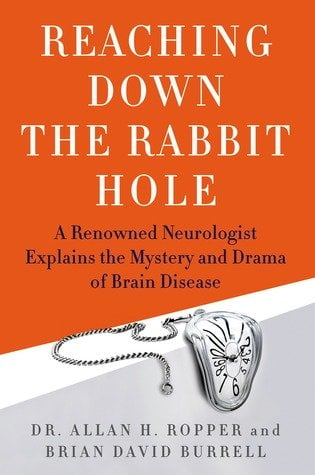
Reaching Down the Rabbit Hole is a book about the front line of clinical neurology, and the struggle of trying to heal the body when the mind is under attack.
By watching and listening to the patient, he is able to rapidly deduce what the problem is. Much like Alice’s Adventures in Wonderland, absurdities are a daily occurrence in Dr Ropper’s patients, and he explains some of the more interesting cases he encounters.
Read about cases such as the man found circling around in traffic because he couldn’t find his way home, a child molester who after slipping on ice has a brain that’s dead in a body that’s alive, and a mom diagnosed with ALS who has to decide whether a life locked inside her own head is worth living.
Written more as a story than simply stating the facts, and going into detail with each case, this is a good book for teaching psychology students about the different symptoms for brain diseases. The book manages to be both compassionate and informative and offers a better understanding into the complexity of the job of a neurologist.
Elephants on Acid: And Other Bizarre Experiments by Alex Boese
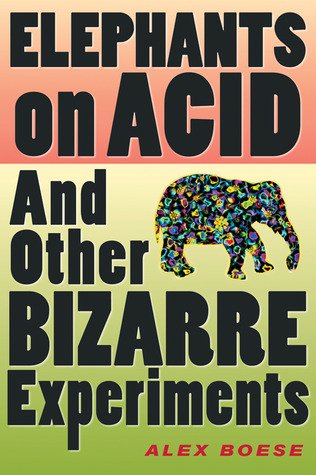
Elephants on Acid is an exploration into the craziest psychological experiments that have happened across time (but mainly the 1970s) in the name of science. The experiment referred to in the title is one in which an elephant called Tusko was selected for an experiment to determine what happens to an elephant given a massive dose of LSD.
Other experiments discussed include: Will babies instinctively pick a well-balanced diet? Will the average dog summon help in an emergency? Why can’t we tickle ourselves? And is it possible to bring back life to the dead?
This is a book filled with strange, often terrifying experiments in a time when there weren’t measures in place to protect the individual being experimented on.
Every psychology student should read this because it really makes you appreciate the importance of the ethical procedures put in place for psychological experiments in the 21st century. This is a book which is both horrifying and humorous.
Note: this may be a book that is quite upsetting for animal lovers, as many of the experiments written about in this book are extremely disturbing.
Mistakes Were Made (But Not by Me) by Carol Tavris and Elliot Aronson
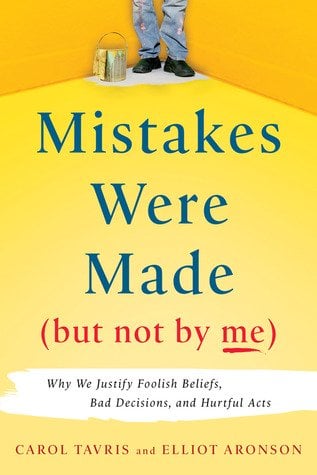
Have you ever wondered how strong the power of suggestion really is? Have you ever bought the more expensive of two similar items and then spent ages telling yourself that the cheaper one would’ve been completely unreliable? If so, then this is the book for you.
Written by two social psychologists, the book deals with cognitive dissonance, confirmation bias and other cognitive biases, explaining why it is that when people make mistakes, they convince themselves they are right to spare themselves the embarrassment of being wrong.
"If mistakes were made," say the authors, "memory helps us remember that they were made by someone else." For example, when you swear you put an object somewhere and it’s found in a different place, you proceed to convince yourself that someone else must’ve moved it.
Tavris and Aronson explore whether we ever really believe the stories we tell ourselves and other people, and what this has meant throughout history.











Get closer to your dream programme
Your consent preferences have been set.
Time to start exploring.
Your account has been removed.
You can still browse the site or sign up again once you have parental consent.
Get closer to your dream programme